
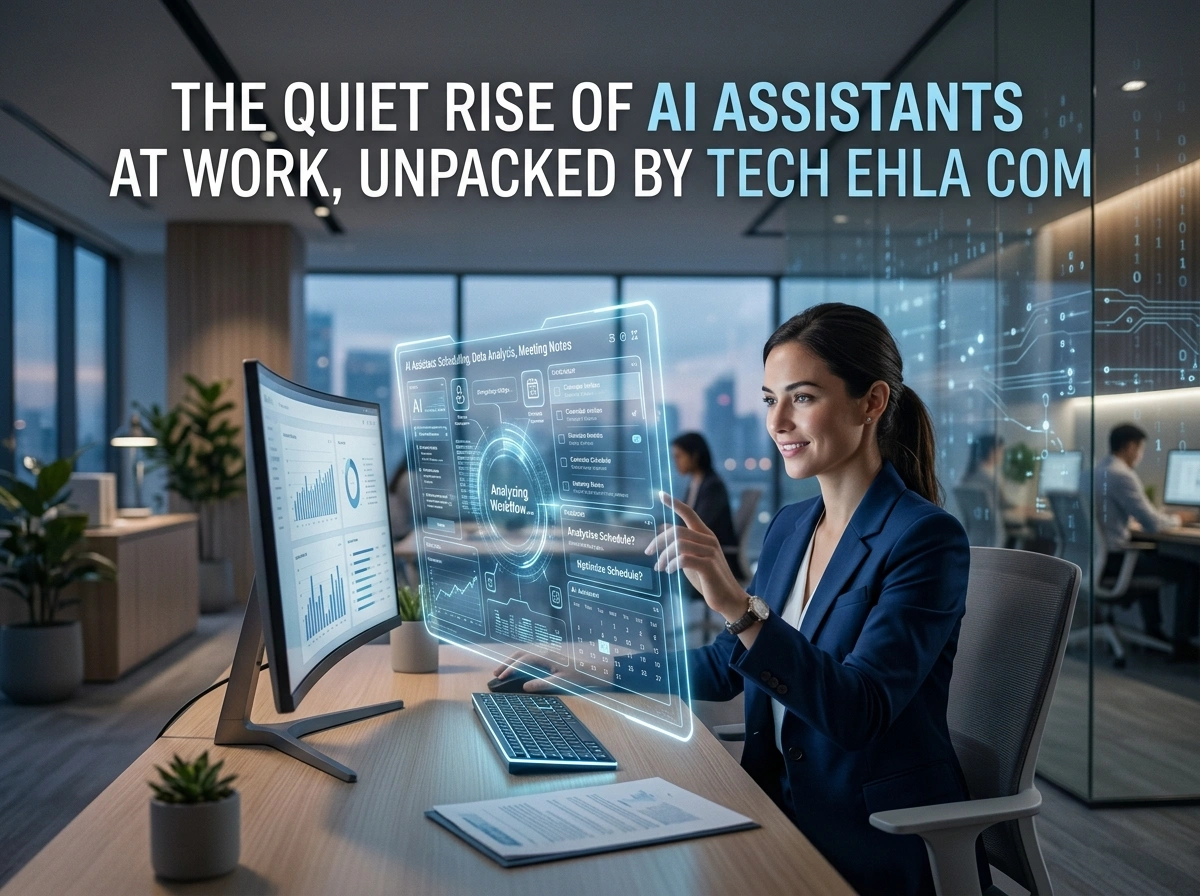
Something interesting is happening in offices around the world, and most people barely notice it. AI assistants have slipped into daily work life without much fanfare. There were no dramatic announcements or robots marching through the lobby. Instead, these tools arrived quietly, one small task at a time. Today they draft emails, schedule meetings, summarize long reports, and answer questions in seconds.
This shift is reshaping how we work, and it’s happening faster than many expected. Let’s take a closer look at how AI assistants are changing the modern workplace and what this means for the people who use them every day.
What Exactly Are AI Assistants at Work?
An AI assistant is software that uses artificial intelligence to help with tasks. Think of tools that write text, sort data, book calendar slots, or pull answers from company documents. Some live inside apps you already use, like email or chat platforms. Others work as standalone tools you open when you need a hand.
What makes them special is how they understand plain language. You don’t need to learn code or complex commands. You simply type or speak, and the assistant responds. This ease of use is a big reason why so many workers have welcomed them so quickly.
The Productivity Boost Nobody Saw Coming
The most obvious benefit is speed. Tasks that once took an hour can now take minutes. Writing a first draft of a proposal, for example, used to mean staring at a blank page. Now an assistant can produce a solid starting point in seconds. You still shape and polish it, but the hardest part is done for you.
This adds up over time. When you save ten minutes here and twenty minutes there, you free up hours each week. Those hours can go toward deeper thinking, creative work, or simply catching your breath. Many teams report that they can now handle more projects without adding staff.
Productivity isn’t just about doing more, though. It’s also about doing better. AI assistants catch small mistakes, suggest clearer wording, and spot patterns in data that humans might miss. The result is work that’s both faster and sharper.
Saying Goodbye to Repetitive Tasks
Every job has boring parts. Sorting emails, updating spreadsheets, copying data from one system to another, and formatting documents all eat into your day. These tasks are necessary but draining. They rarely require much thought, yet they demand your time and attention.
AI assistants shine here. They handle repetitive chores with ease, working without getting tired or bored. Imagine an assistant that automatically files incoming emails, flags urgent ones, and drafts polite replies. Or one that updates your project tracker the moment a task changes status.
By taking over this grunt work, AI frees people to focus on tasks that actually need a human touch. Building relationships, solving tricky problems, and making judgment calls still belong to us. The machines handle the routine, and we handle the meaningful.
How Employees Are Actually Adopting These Tools
Adoption has been surprisingly smooth in many workplaces. Part of the reason is that AI assistants often feel like helpers rather than replacements. They sit beside workers, offering suggestions and shortcuts, not taking over jobs.
Younger workers tend to adopt these tools quickly, but they aren’t the only ones. Employees of all ages find value once they see how much time they save. The learning curve is gentle. Most people can start using a basic AI assistant within minutes.
Still, adoption isn’t always perfect. Some workers worry about accuracy. Others feel unsure about when to trust AI output. Smart companies address these concerns with training and clear guidelines. When people understand both the strengths and the limits of AI, they use it more confidently. Resources like tech ehla com help readers stay informed about these tools and how to use them well.
Fitting AI Into Daily Workflows
The real magic happens when AI assistants blend into existing routines. Nobody wants to juggle yet another app. The best assistants work quietly inside the tools you already rely on.
Picture your usual morning. You open your inbox, and the assistant has already summarized overnight messages. During a meeting, it takes notes and lists action items. After lunch, it drafts a report while you review the numbers. By the end of the day, it reminds you of tasks you almost forgot.
This kind of seamless integration is what turns a novelty into a habit. When AI support feels natural, people use it without even thinking about it. That’s the sign of a truly useful tool. It fades into the background and simply makes the work flow better.
Common Ways Teams Use AI Assistants Today
- Writing and editing: Drafting emails, reports, and social posts, then refining the tone.
- Scheduling: Finding open times and booking meetings across busy calendars.
- Research: Pulling key facts from long documents or the web in seconds.
- Data work: Cleaning spreadsheets, spotting trends, and creating quick summaries.
- Customer support: Suggesting replies and answering common questions instantly.
Addressing the Real Concerns
No honest look at AI would skip the worries. People fear job loss, privacy problems, and over-reliance on machines. These concerns deserve respect, not dismissal.
Job displacement is real for some roles, but history shows that new tools also create new work. The nature of jobs shifts rather than vanishes. Workers who learn to team up with AI often become more valuable, not less.
Privacy matters too. Companies must be careful about the data they feed into these tools. Clear rules and secure systems protect sensitive information. And while AI is powerful, it makes mistakes. Human review remains essential. The goal is partnership, not blind trust.
The Future of Human-AI Collaboration
Looking ahead, the line between human work and AI support will keep blurring. Assistants will grow smarter, understanding context and remembering your preferences. They’ll anticipate needs before you even ask.
Yet the human role won’t disappear. Instead, it will change. We’ll spend less time on busywork and more time on creativity, strategy, and connection. The best results will come from people and AI working as a team, each doing what they do best.
This future isn’t about machines replacing us. It’s about machines freeing us to be more human at work. Empathy, imagination, and wisdom remain ours alone. AI simply clears the clutter so those qualities can shine.
Companies that embrace this partnership will pull ahead. They’ll move faster, adapt quicker, and give their people more room to do great work. The quiet rise of AI assistants is really the rise of a smarter way to work.
Final Thoughts
AI assistants entered the workplace without much noise, but their impact grows louder every day. They boost productivity, wipe out tedious tasks, and slide neatly into our daily routines. Employees are adopting them, and the smart use of these tools is becoming a real skill.
The road ahead calls for balance. We need to embrace the speed and support AI offers while staying mindful of its limits. Handle privacy with care, keep humans in the loop, and treat AI as a partner rather than a crutch.
The quiet revolution is well underway. Those who learn to work alongside AI today will be the ones shaping the workplace of tomorrow. The future of work isn’t human versus machine. It’s human and machine, side by side, building something better together.
