
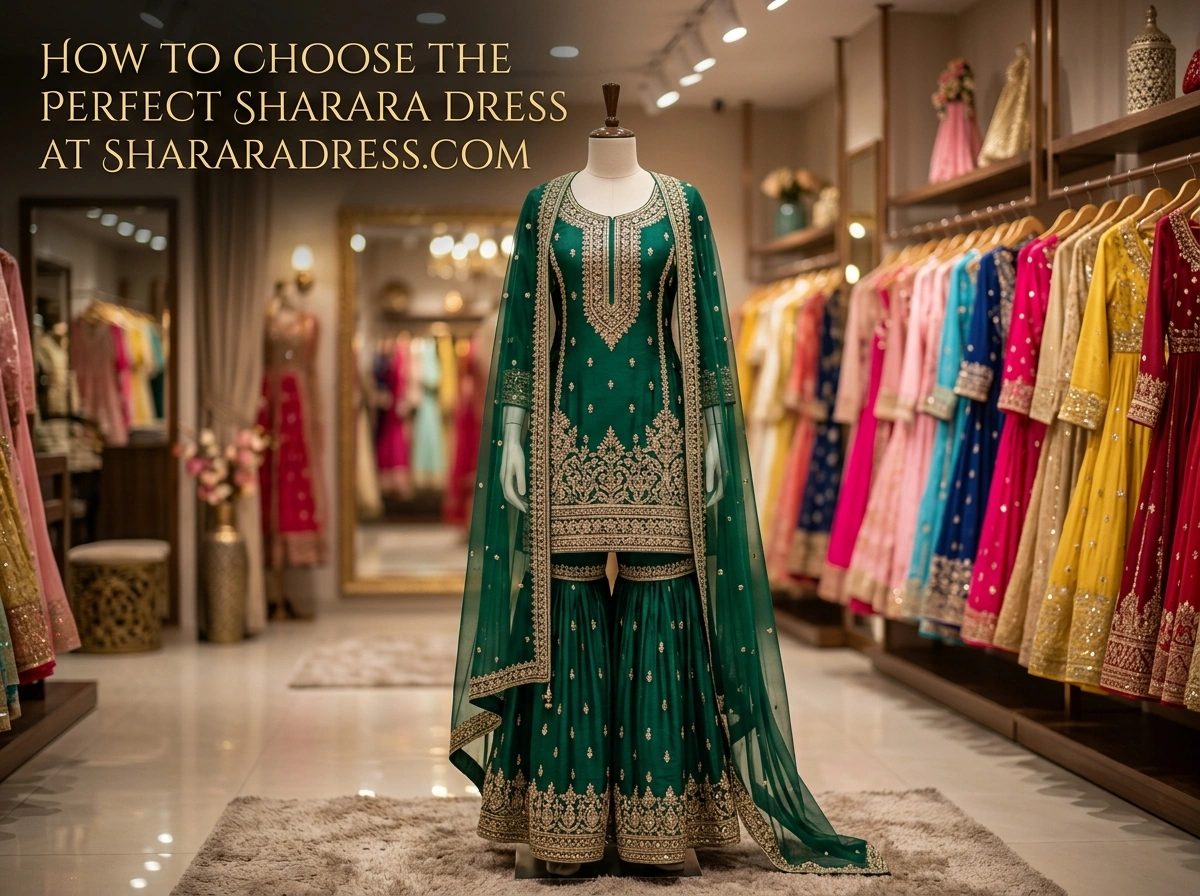
The sharara has traveled a long way to land in American closets, and it shows no signs of slowing down. Once reserved for grand weddings in South Asia, this flowing, flared ensemble now appears at Eid celebrations in Houston, mehndi nights in New Jersey, and even fusion fashion shoots across California. Its blend of heritage and drama makes it a favorite for anyone who wants to make an entrance.
But here’s the thing: not every sharara works for every body, budget, or event. Picking the right one takes a little know-how. This guide walks you through everything you need to consider, from fabric and fit to color and styling, so you can shop with confidence and end up with a piece you’ll actually love wearing.
Quick takeaways
- The right fabric and fit matter more than price alone.
- Match the embroidery and color to your occasion.
- Styling and accessories can completely transform a sharara.
What Is a Sharara, and Why Does It Matter?
A sharara is a traditional South Asian outfit made up of three parts: a fitted top (kurti or kameez), wide flared trousers that fall from the knee, and usually a dupatta (scarf). The defining feature is the dramatic flare of the bottoms, which creates a graceful, skirt-like silhouette when you walk.
The style carries deep cultural roots. It rose to popularity among Mughal-era nobility and became a staple of bridal and festive wardrobes across India, Pakistan, and Bangladesh. For South Asian communities in the United States, the sharara is more than fashion. It’s a way to honor heritage during weddings, Eid, Diwali, and family gatherings while still feeling modern and stylish.
Understanding this background helps you appreciate the difference between a casual everyday sharara and an ornate bridal one. That distinction guides every choice you’ll make next.
Key Factors to Consider When Choosing a Sharara Dress
The perfect sharara comes down to five things: fabric, embroidery, occasion, fit, and color. Get these right, and you’ll have an outfit that feels custom-made for you.
Fabric: The Foundation of Comfort and Drape
Fabric shapes how your sharara looks and feels all day. Heavier materials hold structure and shimmer, while lighter ones offer breathability and movement.
- Georgette and chiffon: Lightweight and flowy, perfect for warmer climates or long events where comfort counts.
- Silk and raw silk: Rich and structured, ideal for formal weddings and receptions.
- Velvet: Luxurious and warm, a great pick for winter celebrations in colder states.
- Net and organza: Sheer and elegant, often layered for a dreamy, voluminous flare.
If you’re attending a summer wedding in Arizona, breathable georgette will treat you far better than heavy velvet. Match the fabric to both the season and the setting.
Embroidery and Embellishments: Setting the Tone
The detailing on a sharara signals how dressy it is. Light thread work suits casual gatherings, while heavy zari, sequins, and stonework belong at major events.
- Zardozi and zari: Metallic gold or silver embroidery that screams bridal luxury.
- Mirror work and gota patti: Festive and eye-catching, popular for mehndi and Eid.
- Subtle thread embroidery: Understated elegance for daytime or semi-formal occasions.
Choose embellishment that fits your role at the event. A guest usually wants something refined, while a bride or close family member can go all out.
Occasion: Dress for the Moment
Always start by asking where you’ll wear it. Your event sets the rules for everything else.
- Bridal wear: Opt for heavy embroidery, rich fabrics, and bold jewel tones.
- Festive wear (Eid, Diwali): Vibrant colors with moderate embellishment work beautifully.
- Semi-formal events: Lighter fabrics and minimal detailing keep things classy and comfortable.
Buying a heavily beaded bridal sharara for a casual dinner will leave you overdressed. Matching the outfit to the occasion is the single most important step.
Fit: Where Comfort Meets Confidence
A sharara should flatter your shape and let you move freely. The fitted top should hug comfortably without pinching, and the flared bottoms should sit well at the waist before flowing out.
- Check the waistband for adjustable options if you’re between sizes.
- Make sure the top length suits your proportions; longer kurtis balance taller frames.
- Confirm the flare starts at a flattering point, usually around the knee.
Many online retailers, including shararadress.com, offer detailed size charts and fit guidance to help you order accurately the first time. Always measure yourself before buying.
Color: Reflect Your Personality and the Event
Color sets the mood. Traditional reds and maroons dominate bridal wear, while pastels, jewel tones, and metallics suit festive and modern looks.
- Bold reds, maroons, and gold: Classic bridal and high-celebration choices.
- Pastels (blush, mint, lavender): Soft and contemporary, great for daytime events.
- Jewel tones (emerald, sapphire, ruby): Striking and photogenic for evening functions.
Consider your skin tone and the event lighting too. Deeper shades photograph richly indoors, while pastels glow in daylight.
Different Styles of Sharara Dresses
Sharara designs have evolved well beyond the classic cut. Knowing the main styles helps you find one that matches your taste.
- Classic sharara: The traditional wide-flared trousers paired with a kurti and dupatta. Timeless and elegant.
- Sharara with peplum top: A modern twist featuring a fitted, flared top that adds structure and flair.
- Gharara-style sharara: Trousers that flare dramatically from the knee with extra fabric, creating a fuller look.
- Crop-top sharara: A trendy, fusion-friendly option popular with younger crowds at sangeets and parties.
- Anarkali-paired sharara: Combines a long, flowing top with flared bottoms for a regal silhouette.
Each style serves a different vibe. A crop-top sharara feels playful and current, while an Anarkali-paired set leans formal and grand.
Tips for Styling and Accessorizing Your Sharara
The right accessories turn a beautiful sharara into a showstopper. Balance is key; let the outfit lead and accessorize to complement it.
Jewelry
- Pair heavy embroidery with delicate jewelry to avoid overcrowding.
- Choose statement earrings or a maang tikka with simpler outfits.
- Match metal tones to your embroidery (gold with zari, silver with mirror work).
Footwear
- Embellished juttis or kolhapuris keep the look traditional.
- Heels add height and elongate the flared silhouette.
Dupatta draping
- Drape over one shoulder for a clean, modern finish.
- Style across both shoulders for a regal, bridal effect.
Hair and makeup
- Soft waves or a sleek bun both work well with the dramatic flare.
- Coordinate your makeup intensity with the outfit’s formality.
A well-chosen clutch and a confident smile complete the look. Remember, the goal is harmony, not competition between elements.
Conclusion: Find Your Perfect Sharara with Confidence
Choosing the perfect sharara comes down to understanding your occasion, then matching it with the right fabric, embroidery, fit, and color. Add thoughtful styling, and you’ll have an outfit that turns heads while honoring the rich tradition behind it.
Start by deciding where you’ll wear it, set a realistic budget, and use the size guidance available to get the fit right. When you’re ready to explore curated styles designed for every celebration, browse the collection at shararadress.com and find a piece that feels made for you.
Your next standout look is closer than you think. Choose with care, style with confidence, and wear it with pride.
