
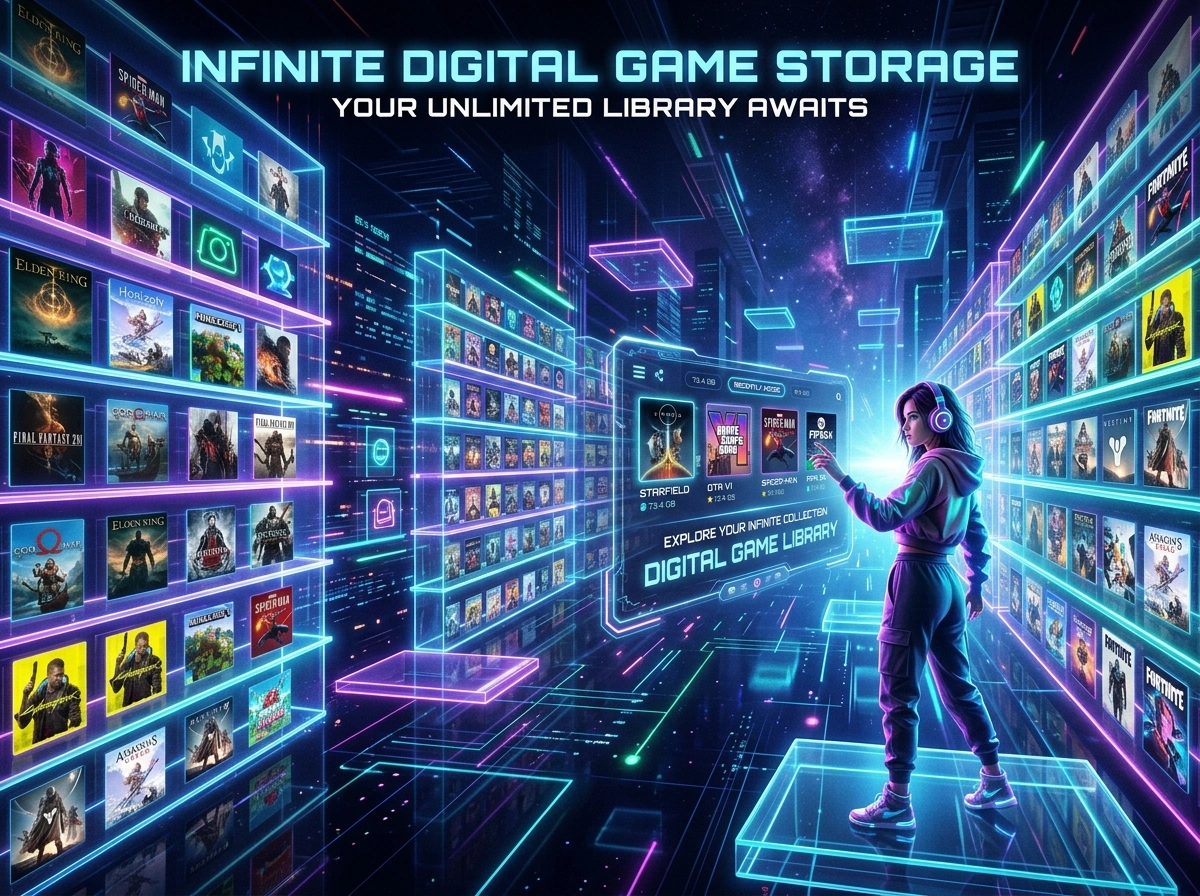
Managing a collection of video games used to require physical shelf space. You would organize cartridges, stack jewel cases, and display your favorite titles for everyone to see. Today, your entire collection lives behind a screen. The transition from physical media to digital downloads has completely reshaped how we buy, play, and store our favorite interactive experiences.
This shift brings incredible convenience. You can access hundreds of titles without ever leaving your couch. However, this convenience also introduces a new set of hurdles. As graphics become more realistic and worlds grow larger, file sizes are skyrocketing. Players constantly juggle storage space, uninstalling older titles to make room for new releases.
Understanding how we manage these digital collections is crucial for any modern player. This article explores the history of digital gaming libraries, the current hurdles players face, and how modern platforms are innovating to solve these problems. You will learn about the latest trends in storage technology and discover new ways to streamline your gaming experience.
The Evolution of Gaming Libraries
The journey from physical media to digital libraries took several decades. In the early days of the medium, physical cartridges and floppy disks were the only ways to distribute software. Players physically swapped media every time they wanted to try something new. The introduction of CD-ROMs and DVDs vastly expanded how much data a single game could hold, but the physical requirement remained.
Eventually, broadband internet became widespread. This connectivity allowed developers to deliver updates directly to consoles and computers. Soon after, digital storefronts emerged. Players started purchasing smaller titles directly through their devices. As internet speeds increased, full retail releases became available for download.
Mobile gaming accelerated this trend. Smartphones do not have disc drives, meaning the entire ecosystem relies on digital distribution. Players began accumulating massive libraries of mobile applications tied directly to their user accounts. This digital-first approach trained an entire generation of players to expect instant access to their entertainment. Today, digital sales dominate the market across consoles, computers, and mobile devices.
Challenges in Modern Game Storage
While digital libraries offer unprecedented convenience, they create significant technical hurdles. The most obvious issue is the sheer size of modern releases. A premium title today can easily demand over 100 gigabytes of space. High-resolution textures, uncompressed audio files, and massive open worlds require vast amounts of data. Most standard hard drives fill up after installing just a handful of these massive applications.
Players are forced into a constant cycle of data management. You have to decide which software to delete before you can install something new. Redownloading a massive file later can take hours, depending on your internet connection. This friction ruins the spontaneous joy of jumping into a multiplayer match with friends.
Furthermore, device fragmentation complicates the user experience. You might play on a computer, a console, and a smartphone. Managing storage across all these distinct environments is frustrating. Security is also a major concern. Because your library is tied to digital accounts, losing access to an account means losing access to your entire collection. Players need secure, centralized ways to manage their digital assets without constantly worrying about hardware limitations.
Introducing Game Vault
To combat the friction of modern digital storage, new platforms are emerging that centralize the gaming experience. Instead of forcing players to manage massive local files across disjointed storefronts, these unified platforms offer instant access to curated libraries. One such solution that has gained traction in the mobile space is Game vault.
This platform represents a shift in how players interact with digital collections on their mobile devices. Rather than downloading dozens of individual applications that clutter your smartphone screen and drain your storage capacity, users access a centralized hub. This environment hosts a massive variety of premium titles in one secure location.
The approach streamlines the user experience significantly. Players can jump between different experiences seamlessly. It eliminates the need to constantly monitor your device’s remaining storage space. By hosting a wide array of high-definition software within a single ecosystem, the platform provides a modern solution to digital library management.
Key Features and Innovations of Game Vault
Modern platforms must offer more than just a list of titles to stand out. They need robust infrastructure and player-friendly innovations. The platform mentioned above includes several features designed to optimize the digital gaming experience.
First, it offers instant access to an expansive library. Players can choose from over 100 high-definition titles. These include popular options like Rainbow Riches, Blazing Tiki, and Brilliant Diamonds. Because these are accessed through a unified platform, you avoid the hassle of managing individual installations for every single activity. The stunning graphics and smooth gameplay are optimized directly for mobile devices.
Security is another major innovation. Managing digital assets requires immense trust. The platform uses state-of-the-art SSL encryption to protect user data and gaming balances. All transactions are processed through a network of thoroughly verified agents. This ensures that players can load credits and withdraw their rewards safely.
Finally, the platform prioritizes continuous access and community. A dedicated support team is available around the clock to assist with any technical issues. Players also benefit from daily exclusive promotions and a thriving global community. This turns a simple storage solution into an active, engaging entertainment hub.
The Future of Digital Storage in Gaming
The technology behind digital libraries will continue to evolve rapidly. Hardware manufacturers are already releasing faster storage solutions. The adoption of NVMe solid-state drives drastically reduces loading times, allowing developers to stream assets directly from the drive to the screen. This technology makes massive digital worlds feel seamless.
However, the most significant changes will likely come from the cloud. Cloud gaming allows players to stream software directly from remote servers, entirely bypassing local hardware constraints. You do not need to download a 100-gigabyte file if a powerful server handles all the processing. This technology promises to make premium gaming accessible on almost any screen, from smart televisions to low-end smartphones.
We will also see a push toward unified digital ecosystems. Players want their progress, purchases, and libraries to carry over regardless of where they choose to play. Platforms that successfully bridge the gap between different hardware environments will dominate the next decade. As internet infrastructure improves globally, the concept of “installing” software may eventually become a thing of the past.
Navigating the Next Era of Gaming
The way we collect and store video games has changed forever. The physical shelves of the past have been replaced by endless digital lists. While ballooning file sizes and device limitations present real hurdles, the industry is adapting quickly. Unified platforms and advanced streaming technologies are making it easier than ever to manage massive libraries.
As a player, staying informed about these platforms ensures you get the most out of your digital collection. You no longer have to let storage anxiety dictate what you play. By leveraging centralized hubs and secure ecosystems, you can focus entirely on the fun. Embrace the convenience of digital libraries and explore the vast entertainment options available at your fingertips today.
