
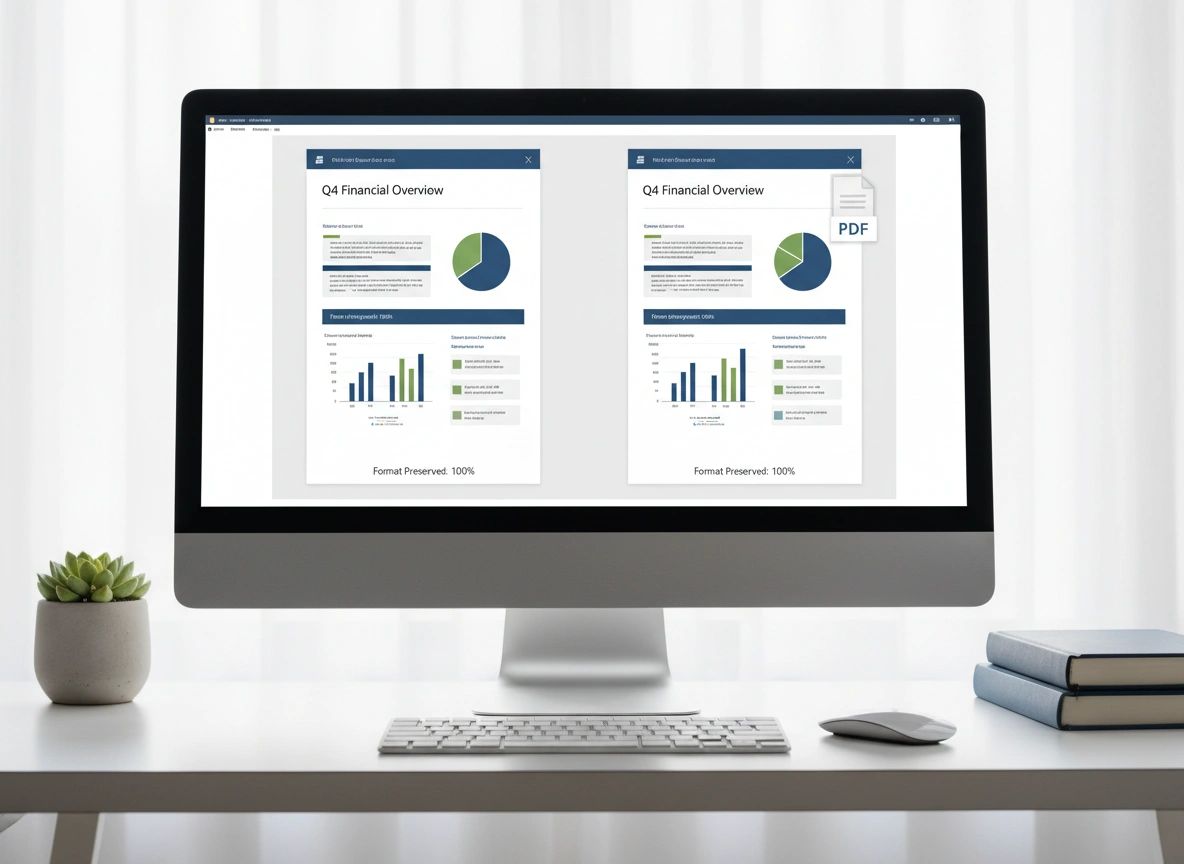
In professional and academic settings, document sharing is a daily activity. Microsoft Word is the standard for document creation, while the Portable Document Format (PDF) is the gold standard for sharing and distribution. The process of converting a Word document to a PDF should be straightforward, yet it often introduces frustrating formatting issues. From shifted text and distorted images to incorrect fonts, these problems can undermine a document’s professionalism and readability. Understanding how to navigate the conversion process correctly is essential for maintaining the integrity of your work.
This comprehensive guide explores the best practices for converting Word documents to PDFs while perfectly preserving formatting. We will delve into the importance of this process, identify common challenges, and provide actionable strategies to ensure your final document looks exactly as you intended.
The Importance of Preserving Formatting
The primary reason for converting a Word document to a PDF is to create a static, universally accessible version of your file. Unlike a Word document, which can appear differently depending on the user’s operating system, software version, or installed fonts, a PDF is designed to look the same everywhere. Preserving formatting is not just about aesthetics; it is about maintaining the document’s structure, credibility, and effectiveness.
Professionalism and Credibility: A document with broken formatting, such as misaligned paragraphs or incorrect line spacing, appears unprofessional. Whether you are submitting a business proposal, a resume, or a legal contract, formatting errors can distract the reader and reflect poorly on your attention to detail.
Readability and Structure: Proper formatting guides the reader through the document. Headings, bullet points, and indentation create a logical hierarchy that makes information easier to digest. When this structure is lost during conversion, the document can become a confusing block of text, diminishing its impact and clarity.
Brand Consistency: For businesses, documents are an extension of their brand. Consistent use of specific fonts, colors, and logos in reports, presentations, and marketing materials is crucial for brand identity. Formatting preservation ensures that this brand consistency is maintained across all shared documents.
Accessibility: Correctly formatted documents, especially those with tagged elements like headers and alt text for images, are more accessible to users with disabilities who rely on screen readers. Preserving these structural elements during PDF conversion is a key component of creating inclusive documents.
Common Challenges in Word to PDF Conversion
The transition from a dynamic format like word to pdf a static one like PDF can be complex. Several common challenges arise during this process, leading to a loss of formatting fidelity.
Font Substitution: One of the most frequent issues is font substitution. If the fonts used in your Word document are not embedded during the conversion or are not available on the recipient’s system, the PDF viewer may substitute them with default fonts. This can drastically alter the document’s appearance and spacing.
Image and Graphic Distortion: Images, charts, and other graphics can shift, resize, or lose quality. Complex layouts involving text wrapping around images are particularly susceptible to distortion. Transparency effects and vector graphics can also be rendered incorrectly.
Layout and Spacing Shifts: Margins, line spacing, and paragraph indentation can change unexpectedly. A perfectly aligned page in Word may appear with awkward page breaks or condensed text in the resulting PDF. This is often caused by subtle differences in how Word and the PDF converter interpret page layout instructions.
Hyperlink and Table of Contents Failures: Interactive elements are a major point of failure. Hyperlinks may become inactive, and a clickable table of contents generated in Word may lose its functionality. Internal document links and bookmarks can also break during the conversion.
Header and Footer Inconsistencies: Information in headers and footers, such as page numbers, document titles, or dates, can sometimes be misaligned, duplicated, or lost entirely, especially in documents with complex section breaks.
Best Practices for Flawless Formatting Preservation
Proactively managing your document setup in Word is the most effective way to prevent formatting issues. By following these best practices, you can ensure a smooth and accurate conversion.
1. Optimize Your Word Document Before Conversion
The foundation of a perfect PDF is a well-structured Word document.
- Use Styles for Formatting: Instead of manually formatting text (e.g., selecting text and making it bold or changing its size), use Word’s built-in Styles for headings, subheadings, and body text. Styles apply consistent formatting and create a structural foundation that PDF converters can interpret more reliably.
- Insert Proper Page Breaks: To control where a new page begins, use the “Page Break” function (Insert > Page Break) instead of hitting the Enter key multiple times. This ensures that your page breaks are respected during conversion.
- Anchor Images Correctly: For images and objects, use the “In Line with Text” wrapping option whenever possible. This treats the image like a large character of text, preventing it from shifting. If you need text to wrap around an image, use the “Square” or “Tight” options and double-check the results after conversion. Use the anchor feature to lock an image’s position relative to a paragraph.
- Create Tables with Word’s Tools: Build tables using Word’s “Insert Table” feature rather than using tabs or spaces to align columns. This ensures the tabular data remains structured and aligned in the PDF.
2. Manage Fonts Effectively
Font-related issues are preventable with the right approach.
- Embed Fonts in the PDF: The most critical step for font preservation is to embed them. When you embed fonts, the font file data is included within the PDF itself, ensuring the document will look correct on any device, regardless of the fonts installed. This option is available in most high-quality PDF converters.
- Stick to Standard Fonts: When possible, use common, universally available fonts like Arial, Times New Roman, or Calibri. While less creative, they are less likely to cause substitution issues.
3. Choose the Right Conversion Method
How you create the PDF matters significantly.
- Use the “Save As PDF” Feature in Microsoft Word: For most users, the best and most reliable method is Word’s native “Save As” or “Export” functionality. This feature is highly optimized for converting Word documents. When using “Save As,” select “PDF” from the dropdown menu. Before saving, click on “Options” (Windows) or “Best for printing” (Mac) to access more settings. Ensure that “ISO 19005-1 compliant (PDF/A)” is checked if you need an archival-quality document.
- Check the “Optimize for” Settings: In the “Save As” dialog box, you will often see options to optimize for “Standard (publishing online and printing)” or “Minimum size (publishing online).” “Standard” prioritizes quality and is better for preserving complex formatting and image resolution. “Minimum size” compresses the file more aggressively, which can degrade quality.
Recommended Tools and Software
While Word’s built-in converter is excellent, other tools offer advanced features.
- Microsoft Word’s Native “Save As PDF”: As mentioned, this should be your first choice. It is integrated, free, and highly effective for most documents. It provides essential options like font embedding and quality optimization.
- Adobe Acrobat Pro: As the creator of the PDF format, Adobe offers the most powerful tool for PDF creation and editing. Using the Acrobat plugin within Word gives you granular control over the conversion process. You can specify job options that control image compression, font embedding, and color profiles with extreme precision. It is the professional standard for a reason, but it comes with a subscription cost.
- High-Quality Online Converters: If you do not have access to modern versions of Word or Adobe Acrobat, reputable online converters can be a good alternative. Choose well-known services to protect your data privacy. These tools are convenient but may offer fewer customization options than desktop software. Always download and review the converted file carefully.
Troubleshooting Post-Conversion Formatting Issues
Even with the best preparation, you may occasionally encounter issues. Here are some tips for fixing them.
- Review the PDF Carefully: Before sending the PDF, perform a thorough visual inspection. Compare it side-by-side with your original Word document, paying close attention to pages with complex layouts, images, and tables.
- Check Interactive Elements: Click on all hyperlinks, bookmarks, and table of contents entries to ensure they are working correctly. If they are broken, the issue likely lies in the conversion settings. Try re-converting with settings that preserve tags and links.
- Adjust Images and Re-convert: If an image is distorted, go back to the Word document. Try re-inserting the image or using a different text wrapping option. Compressing images within Word before conversion can sometimes help, but it may also reduce quality.
- Edit the PDF Directly: With a tool like Adobe Acrobat Pro, you can make minor edits directly within the PDF. You can correct small text errors, adjust image placement, or re-enable links. This is often faster than re-converting for small fixes. However, extensive edits are best made in the source Word document.
- Print to PDF as a Last Resort: If all else fails, the “Print to PDF” function can be a solution. This method essentially creates a “snapshot” of what the printed document would look like. While it is excellent at preserving visual layout, it often flattens the document, stripping it of interactive elements like hyperlinks and searchable text. The text may be converted into an image, making it inaccessible to screen readers and copy-paste functions. Use this method only when visual fidelity is the absolute priority and interactivity is not needed.
By understanding the interplay between Word and PDF, you can take control of the conversion process. A well-prepared document, combined with the right tools and techniques, will ensure that your final PDF is a perfect, professional representation of your hard work.
